The San Fermín Festival
Inicio » San Fermín guide » The San Fermín Festival
The origins of the San Fermín Festival
The origins of the San Fermín festivities date back to the Middle Ages and are deeply rooted in religious tradition.
In the 12th century, Pedro de París, who was born in Artajona and was Bishop of Pamplona, brought relics of San Fermín, a martyr born in the city, so that its inhabitants could venerate them.
At that time, a festival was held in his honour on 10 October. In the late 16th century, another Bishop of Pamplona, Bernardo Sandoval y Rojas, moved the celebration to 7 July, due to the more favourable weather and to coincide with Pamplona’s bullfighting festivities and livestock fair.
From Sarasate to Hemingway
Like many traditional celebrations in Spain, the San Fermín festivities have evolved over the years, gradually gaining national and international recognition.
By the late 19th century, they were already known beyond Spain’s borders, thanks in particular to two prominent cultural figures.
Pablo Sarasate, the renowned violinist from Pamplona, helped raise the festival’s profile by organising major concerts at the Teatro Principal (now Teatro Gayarre), featuring world-class musicians and some of his personal friends.
Ernest Hemingway, the American Nobel Prize-winning author, helped make the festival famous around the world. His novel The Sun Also Rises (Fiesta), set during the San Fermín festivities, introduced them to an international audience
A Festival for the People
The San Fermín festivities are famous for their strong community spirit. Many of their main traditions grew out of the spontaneous nature and character of the people of Pamplona
The Chupinazo, the Running of the Bulls, the now-discontinued Riau-Riau and the traditional red-and-white outfits all originated within the local community. Over time, these traditions became an essential part of the festivities.
The Pamplona festivals would be nothing without the people of Pamplona and their open character and desire to have fun. A very important role in the animation of the city is played by the Peñas de Pamplona.
Main Events and Traditions
The Sanfermines are for everyone, young and old alike. Day and night, Pamplona is full of things to see and do. The official programme, events organised by local groups and performances at Teatro Gayarre and Baluarte together offer more than 300 activities for all audiences. Here are some of the festival’s most traditional events:

Opening Ceremony
The rocket that marks the start of the festivities, on 6 July at noon.

Running of the bulls
Every morning at 8 a.m., the bulls run through the streets of Pamplona.
Procession
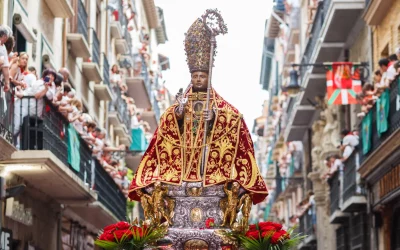
On 7 July, Pamplona pays tribute to San Fermín with a traditional procession.

Giants and Big-Heads Parade
The Giants and Big-Heads Parade delights children and adults alike.

Bullfights
Pamplona’s Bullfighting Fair is one of the most prestigious in Spain.

"Peñas" Parade
After the bullfight, the Peñas take to the streets, filling the city with music and celebration.

Fireworks
Firework displays light up the skies over Pamplona every night.

Dianas
Every morning, Pamplona wakes up to the sound of La Pamplonesa, the city’s municipal band.

Pobre de Mí
The farewell ceremony that marks the end of the festivities, held at midnight on 14 July.
San Fermín for Kids
There are plenty of ways for children to enjoy the San Fermín festivities. They can watch the Giants and Big-Heads Parade, visit the funfair areas in Taconera Park or Plaza de la Libertad, or enjoy the nightly fireworks displays.
Children are undoubtedly among the stars of the San Fermín festivities!